The short version
Mostar sits in the south of Bosnia and Herzegovina, on the Neretva river. There is no single obvious way in, because the useful airports are in other cities and the rail line runs only to Sarajevo. Most visitors arrive by bus from the Croatian coast, by train from Sarajevo, or in a hire car.
Whichever way you come, take your passport. Bosnia and Herzegovina is outside the EU and the Schengen area, so the Croatian routes cross a border each way. The Dubrovnik page covers that crossing in detail.
Train from Sarajevo
The train is the most pleasant way to arrive from the Bosnian capital. The operator is ŽFBH, which runs a Talgo train between Sarajevo and Mostar. The journey takes about 2 hours over 129 km, and there are two departures each way a day.
The times we found, from the rail guide Seat61 (a secondary source, so treat them as a guide):
- Sarajevo to Mostar: 07:15 and 16:46.
- Mostar to Sarajevo: 06:33 every day, and 17:09 every day except Friday to Sunday from June to September.
- A later Mostar departure at 19:56 on Friday to Sunday in summer, tied to a seasonal service that may or may not run again.
Seat61 lists an older second-class fare, which we have not repeated because fares change. Look at zfbh.ba for current times and prices, or ring ŽFBH on +387 33 655 330. Do not rely on a timetable from a blog, including this one, without checking it.
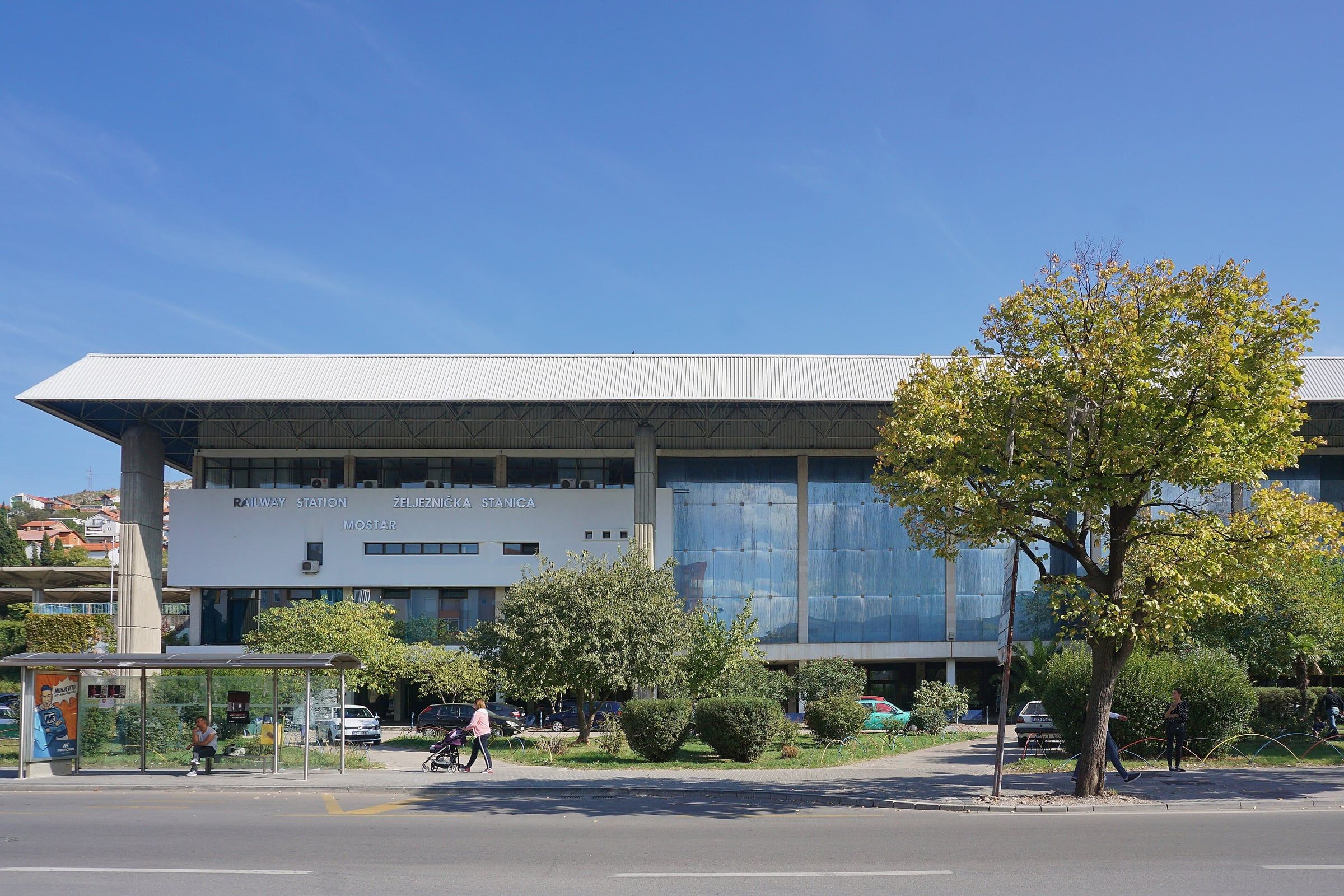
Mostar railway station is also the reference point for the airport distance below.
Bus from Split, Sarajevo and Dubrovnik
Buses are the practical choice from the coast. Mostar has two bus stations, East (Istočni kolodvor) and West (Zapadni kolodvor). FlixBus lists both for its coastal routes, so check which one your booking uses and where it sits relative to your accommodation before you leave.
From Split. FlixBus lists a minimum of 3 h 30 and three trips a day from Split bus station. The fare shown when we looked was from $25.97 with no travel date attached, so we do not quote a price. Check a date you actually want.
From Dubrovnik. FlixBus lists a minimum of 3 h 15 and two departures a day, the first listed at 16:00 and the last at 17:15. Those afternoon times mean the bus suits an overnight stay better than a same-day return. Other operators reportedly run the route as well, taking roughly 3 h 15 to 3 h 45. Border formalities add to every Croatian journey. Our Dubrovnik to Mostar page compares the bus with a tour, a hire car and a private transfer.
From Sarajevo. Buses run between Sarajevo and Mostar as well, but we could not verify operators, times or fares, so we leave them out. The train above is the option we can describe with confidence, and it is the nicer ride.
Flying
Mostar International Airport (code OMO) is in Ortiješ, about 7.4 km from Mostar railway station. It is small and its flights are seasonal. The airport page lists Croatia Airlines to Zagreb, Eurowings, Sky Alps and Air Serbia, but routes change, so look at what actually flies on your dates before you plan around it.
Most people fly somewhere larger and finish the trip on the ground:
- Dubrovnik is the usual choice for people combining Mostar with the Croatian coast. See the Dubrovnik page above.
- Split has the three daily FlixBus trips described earlier.
- Sarajevo connects to Mostar by the train.
We have not verified the distances from those airports to Mostar, so we give none. Use the bus and train times above as your guide.
Driving
A car gives you the most freedom, particularly for the day trips to Blagaj, Počitelj and Kravice. It also brings the most paperwork. From the UK government’s advice:
- A UK driver needs the 1968 International Driving Permit as well as the UK licence to hire or use a vehicle in Bosnia and Herzegovina. Get it before you travel.
- Winter tyre rules apply from November to April.
- Landmines remain from the 1992 to 1995 war in rural and less populated areas. Do not step off roads and paved areas unless you are with an experienced guide. Stay on the road at viewpoints and lay-bys, and do not wander into scrub to find a quiet picnic spot.
Check your hire contract for border rules and insurance before you book, and get anything you are told in writing.
Parking near the Old Town. We could not find a source for parking lots, prices or walking times, so we will not guess. One guide says the Old Town itself is entirely pedestrian, which fits what you see on arrival. The reliable approach is to ask your accommodation where to leave the car, and to book somewhere that mentions parking. Our where to stay page covers the areas.
Entry rules for UK visitors
GOV.UK says UK visitors do not need a visa for tourism for up to 90 days in any 6 months. Your passport must have been issued less than 10 years before you arrive (with an exception for passports issued before October 2018) and must expire at least 90 days after you leave. Get an entry and exit stamp, because travelling without an exit stamp can mean a fine. Foreign nationals must register with the police within 72 hours, which hotels usually do for you.
GOV.UK also warns that the EU Entry/Exit System may cause longer waits on journeys to or from the Schengen area, so leave slack in your plans, especially for a flight or a ferry the same evening. Other nationalities should check their own government’s advice.
If you would rather not arrange it yourself
Several tours collect you from your hotel in Mostar and cover the nearby sights without a car. The eight-hour Blagaj, Počitelj and Kravice trip below is an example. Day trips from the coast are covered on the day tours page.
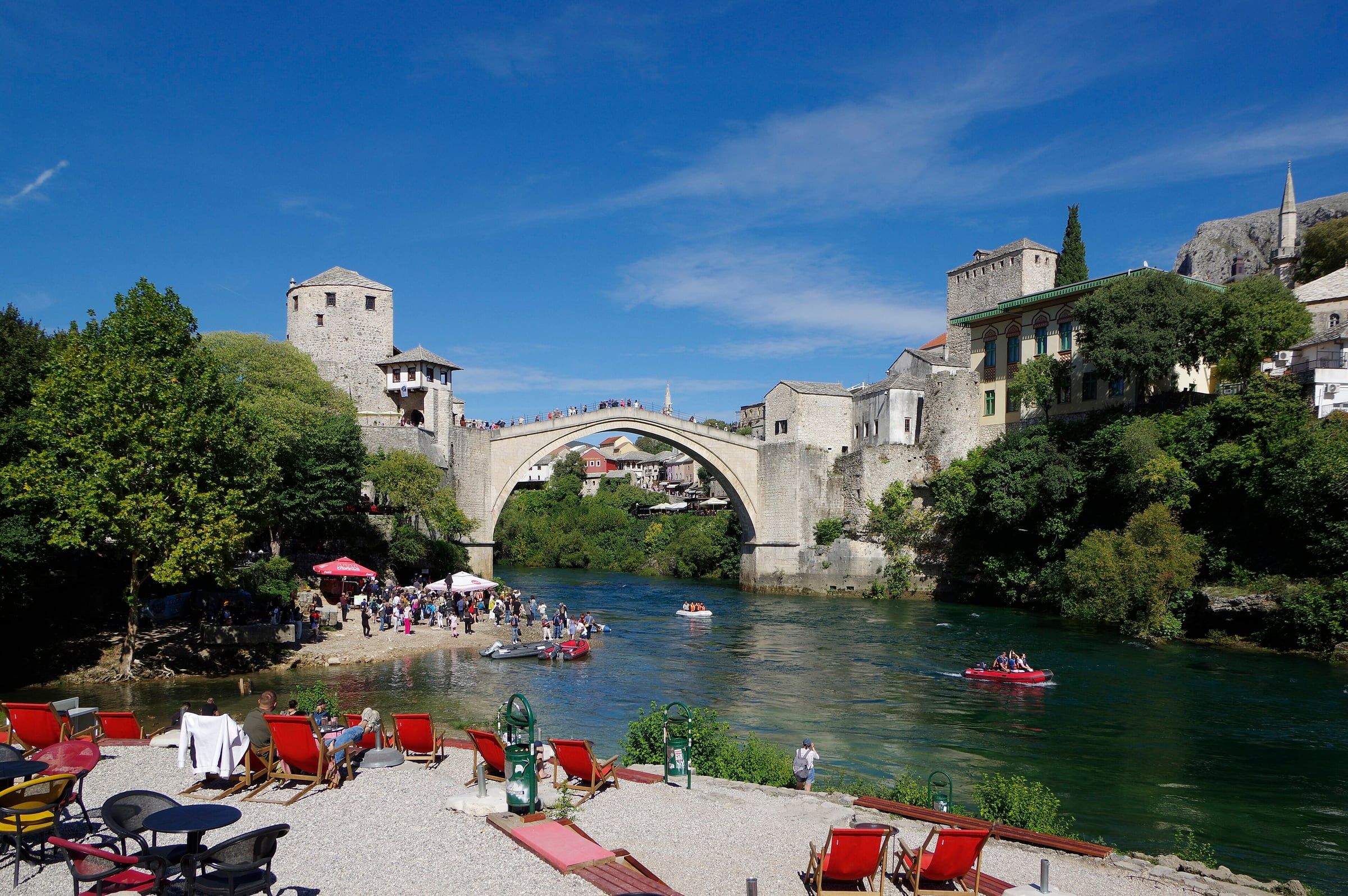
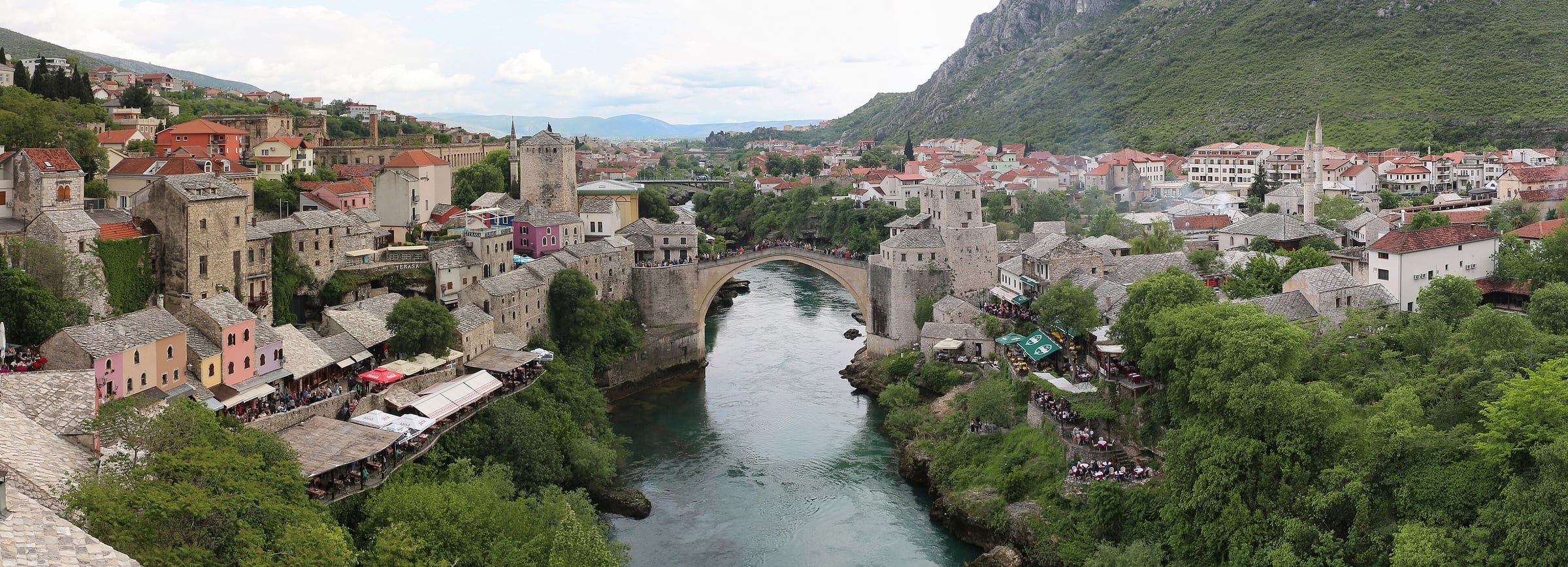
Once you arrive, our one and two day itineraries show how to spend the time, and the Old Bridge guide is the place to start.
Money on arrival
Bosnia and Herzegovina uses the convertible mark, written KM (code BAM), which is pegged at EUR 1 to 1.95583 BAM. Many fees in this guide, from museum entry to Kravice parking, are quoted in KM, so carry some local currency for small payments. We have not verified where cards are accepted, so do not assume it for taxis or small cafes.