Why a night beats a day trip
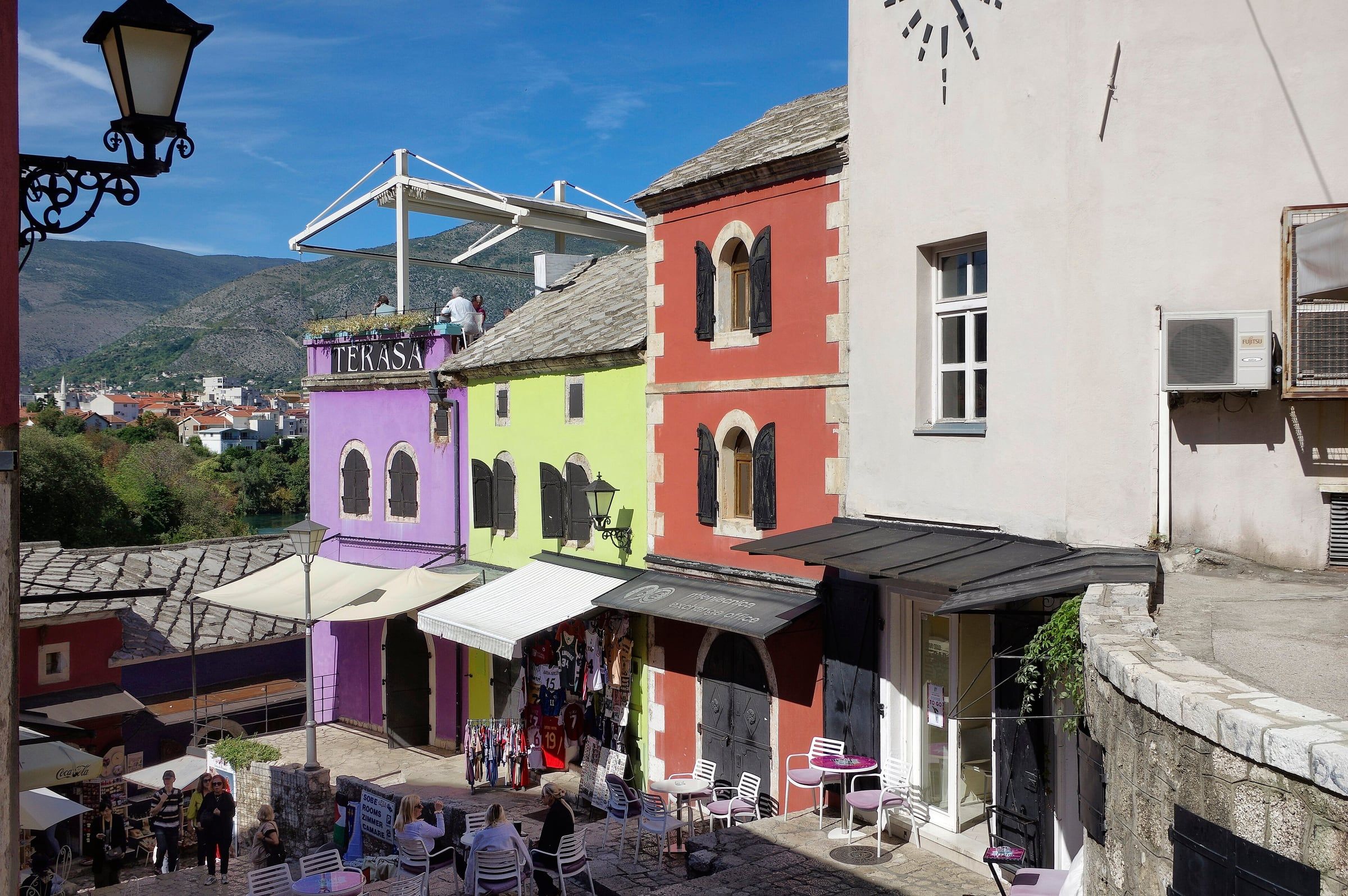
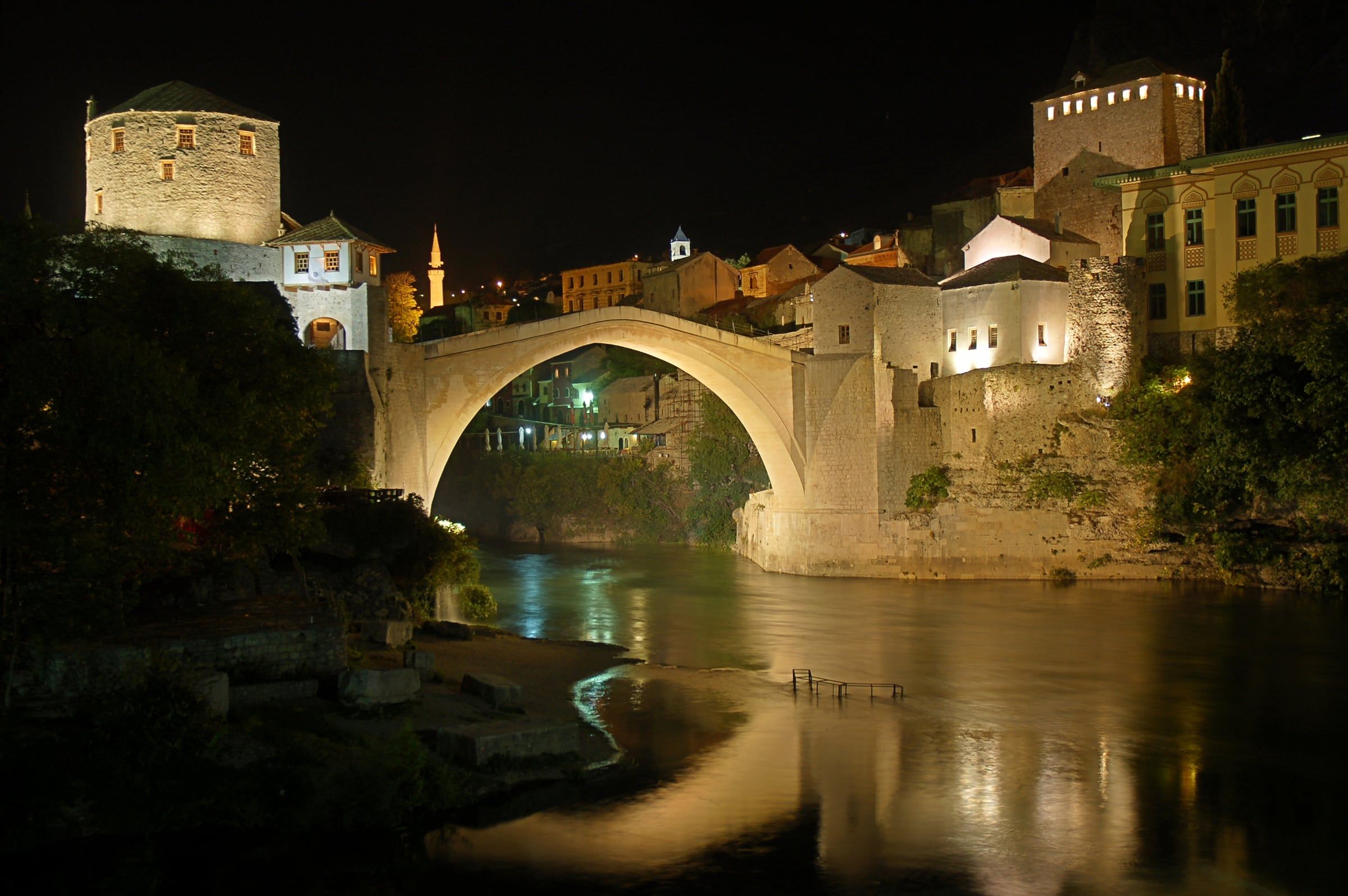
Many visitors see Mostar on a day trip from the coast, which is why the tours we compared run 10 to 12 hours from Dubrovnik, most of it on the road. The coaches arrive during the day, so the Old Town is at its busiest then. One local guide suggests the bazaar quietens in the evening and that staying overnight is highly recommended for seeing the bridge after dark. We have not measured crowds ourselves, so take that as one view.
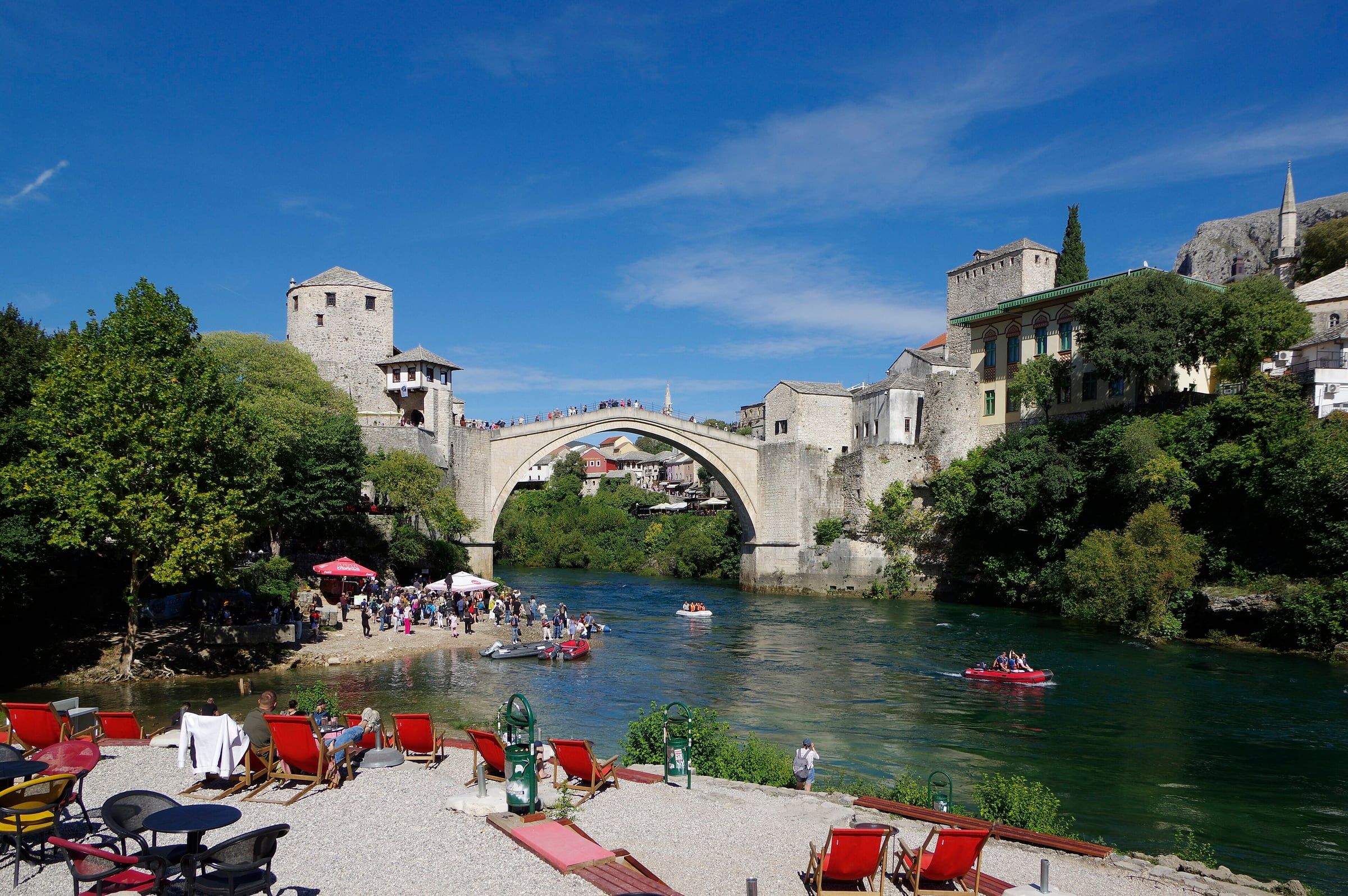
What a night buys you is simple. You can walk the lanes after the day-trip groups have left. You can watch the bridge in the evening light, then in the morning before the day starts. The Old Bridge dates from 1566 and was destroyed on 9 November 1993, then rebuilt and inaugurated on 23 July 2004. It is easier to take that in when you are not on a schedule. The Old Bridge page has the story.
A night also gives you time for the museums and mosques at a gentle pace. Our itinerary page shows how one night and two nights can be used.
The Old Town, on either bank
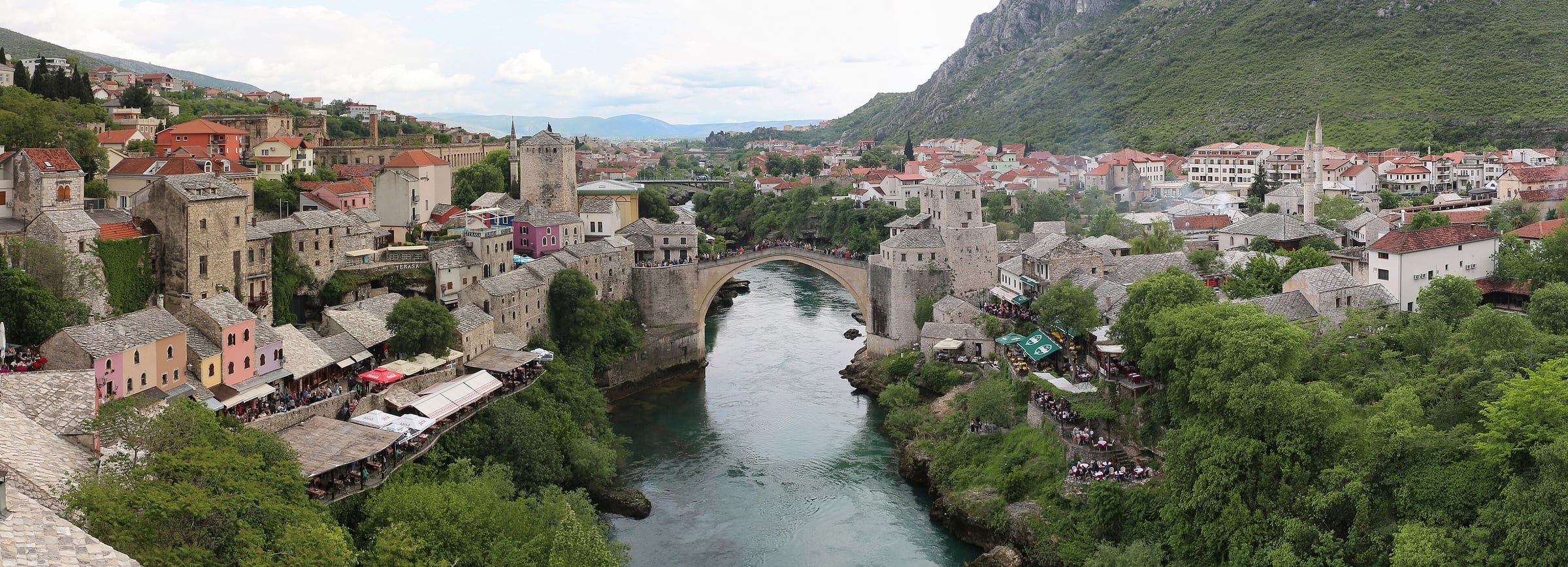
The Old Town centres on the bridge across the Neretva, with the Old Bridge Museum in the Tara tower complex on the left bank next to the bridge. Staying in the lanes on either side puts you within a short walk of almost everything in our Old Town guide.
Pros. You step out to the bridge and the river in a couple of minutes. You can return to your room for a break during the middle of the day and go out again in the evening.
Cons. One guide describes the Old Town as entirely pedestrian, so expect to carry luggage on foot, and ask your host how to reach the door. We could not verify parking, so a car may mean leaving it elsewhere. We also cannot say how loud the evenings are, so ask before you book if you are a light sleeper.
The two banks differ in practical ways we cannot verify, such as noise and access. Read recent reviews on the booking site for the exact building.
The streets just outside the Old Town
The Crooked Bridge (Kriva Ćuprija) crosses the Radobolja stream. One guide describes the surroundings as small stone houses, mill ruins and garden cafes, calling it a quieter spot. That is a good sign for a base that is close but not in the thick of it.
Pros. You are still within walking distance of the bridge, with a calmer street outside your door.
Cons. We have no verified walking times, so check the map for your specific address. We also have no verified information on parking in this area.
The newer west side
The Old Town is the historic centre. The rest of Mostar has grown around it, and the municipality had about 105,000 people at the 2013 census. We could not find a source that compares neighbourhoods on the west side, so we do not claim to know which streets suit visitors.
Pros. A larger, more modern part of town is the likelier place to find different accommodation, and it is where you would expect the everyday shops to be. This is our inference, not a sourced fact.
Cons. You are further from the bridge, so budget time and a way of getting back at night. We have not verified taxi fares or bus connections, so ask your host.
Choosing
- You want the bridge at night: the Old Town or the streets just outside it.
- You want a quieter street: just outside the Old Town, near the Crooked Bridge.
- You are driving and want an easy arrival: ask any host about parking before you book. We have no verified answer.
We do not recommend specific hotels on this page. When we add accommodation links, we will mark them clearly.
Before you check in
Foreign nationals in Bosnia and Herzegovina must register with the police within 72 hours, according to GOV.UK. Hotels usually do this for you. If you rent a private apartment, ask your host whether they handle it. See the getting there page for the full entry rules, and the best time to visit page before fixing your dates.
If you do stay two nights, the second day suits a trip out of town. The eight-hour tour below runs from Mostar to Blagaj, Počitelj and Kravice.
What to check when you book
Whatever area you choose, a few questions are worth asking the host, because we cannot answer them from a source.
- Where can I park, and how far is the door from the car?
- How do I reach the front door on foot, and are there steps?
- How far is it to the bridge, and is there a bus or taxi at night?
- Is there air conditioning? Summer highs average about 33 C in July and 33.5 C in August, with a record of 46.2 C, so it is a fair question.
Read recent guest reviews on the booking site for the exact building, because noise and access vary street by street. We do not write reviews ourselves and do not rate individual places.