- From Mostar, about 15 minutes by car (secondary source)
- About 12 km
- Flow of cold water from the Buna spring
- About 30 m³/s
- Year the guest house was rebuilt
- 1851
A lodge at the foot of a cliff
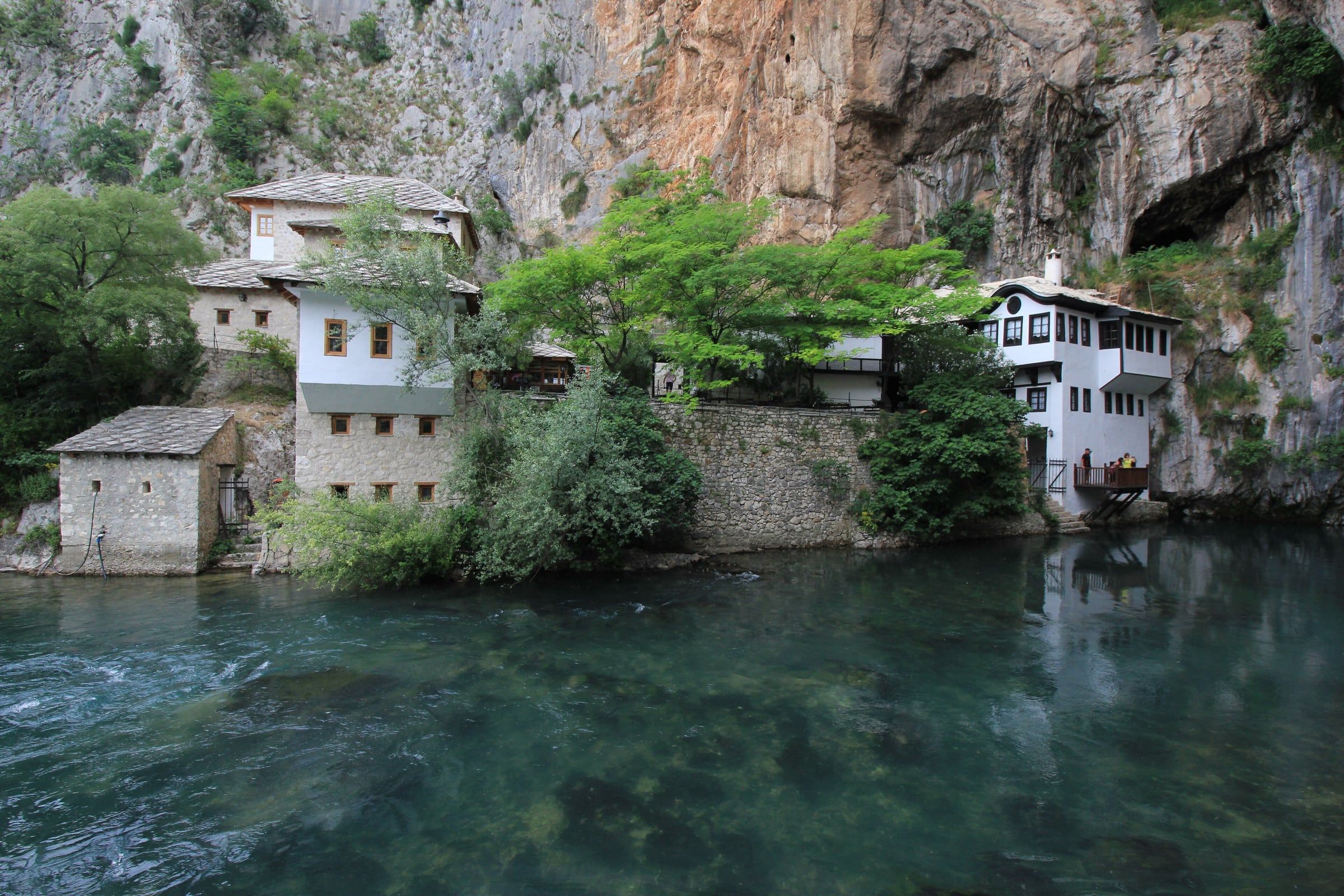
The Blagaj Tekke is a small white building pressed against a tall limestone cliff, with the river Buna flowing out from beneath it. A tekke is a lodge of Sufi Muslims, followers of a mystical tradition within Islam. The setting is the reason people come. The lodge is in a gorge, the river is clear and the cliff overhead cuts out much of the sky.
Blagaj is about 12 km from Mostar and about 15 minutes by car, according to Euro City Guide. It is the closest of the day trips, so it works as a morning stop or a short outing of its own.
The Buna spring
The Buna is a short left-bank tributary of the Neretva. Its source is a karst spring, which means water that has run through limestone and comes out of a cave. Wikipedia gives the flow as about 30 cubic metres per second of cold water. The cave mouth sits under the cliff right behind the tekke, so you see the river appear from the rock.
The tekke
Wikipedia says the tekke ensemble likely dates to around 1520 at the latest. The guest house is older than 1664 and was rebuilt in 1851. Inside, the rooms are simple and the interest is more in the atmosphere than in objects. Take your time on the terrace, where you can watch the water.
Entry and dress
There is a small fee to go inside the tekke. We could not check the amount on an official page, so ask at the entrance and carry cash. The grounds and river are reached without going in.
Dress modestly, because this is a place of worship. Keep your shoulders and knees covered, and be ready to take off your shoes in some rooms.
The town above the spring
Blagaj is more than the tekke. Wikipedia records the first mention of the town in 1423 and says the Ottomans arrived in 1466. Under their rule Blagaj became the seat of an administrative district called the Blagaj Vilayet. The town appears as “Bona” in a work by the Byzantine emperor Constantine Porphyrogenitus, when it was part of a region called Zahumlje. The 2013 census counted 2,531 residents.
The Buna flows west for about 9 km from the spring before it joins the Neretva, according to Wikipedia. That makes it a very short river, born at full strength from the cave.
Stjepan Grad and other sights
On a hill above the town stands Stjepan Grad, also called Blagaj Fort. Wikipedia describes a medieval fortress that was the seat of the Grand Duke Stjepan Vukčić and the birthplace of Queen Katarina Kosača-Kotromanić. It sits on a level area above steep cliffs, and its walls survive to about 12 to 14 m in places. We could not find a source for who built it or when, and we have not checked how easy the climb is, so ask locally before you head up.
Wikipedia also lists other sights in the Blagaj area. They include the Careva (Imperial) Mosque, built in 1521, and a bridge named after Karađoz-beg, built from 1570. The Velagić family house is part of the protected Blagaj ensemble, and Wikipedia calls it one of the most valuable residential complexes of its type in Herzegovina. We have not verified whether it is open to visitors.
Eating and wandering
Check what is open near the tekke before you plan lunch here. We have not verified restaurants or prices. Allow an hour or two rather than half a day.
Getting there
By car, Blagaj is a short drive from Mostar. See getting there for general transport notes, including the International Driving Permit that UK drivers need to hire a vehicle in Bosnia. Most visitors go on a tour. The Mostar day tour of Blagaj, Počitelj and Kravice lasts about 8 hours with pickup, and a longer Sarajevo day tour also stops here (checked October 2026).
Combine it with
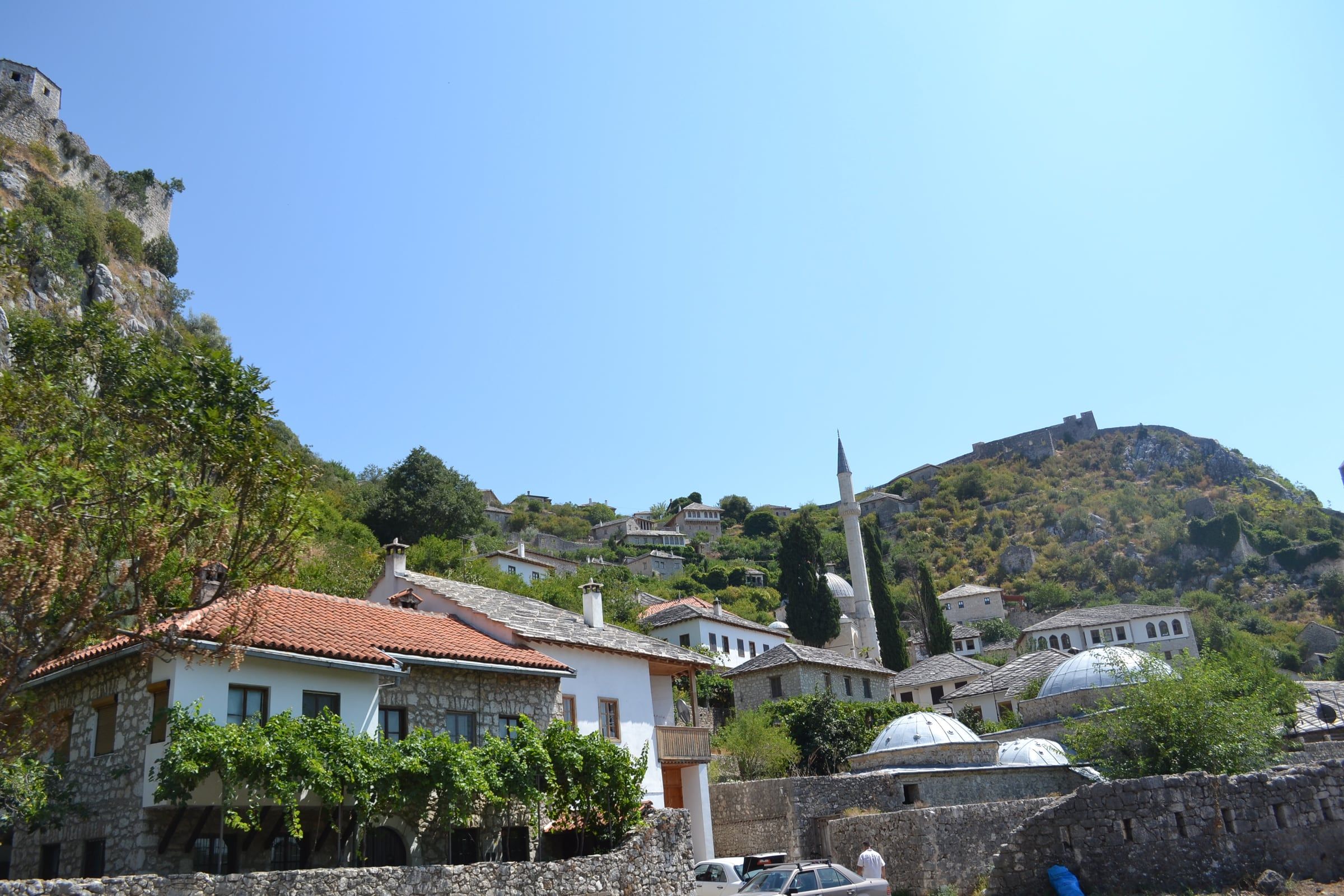
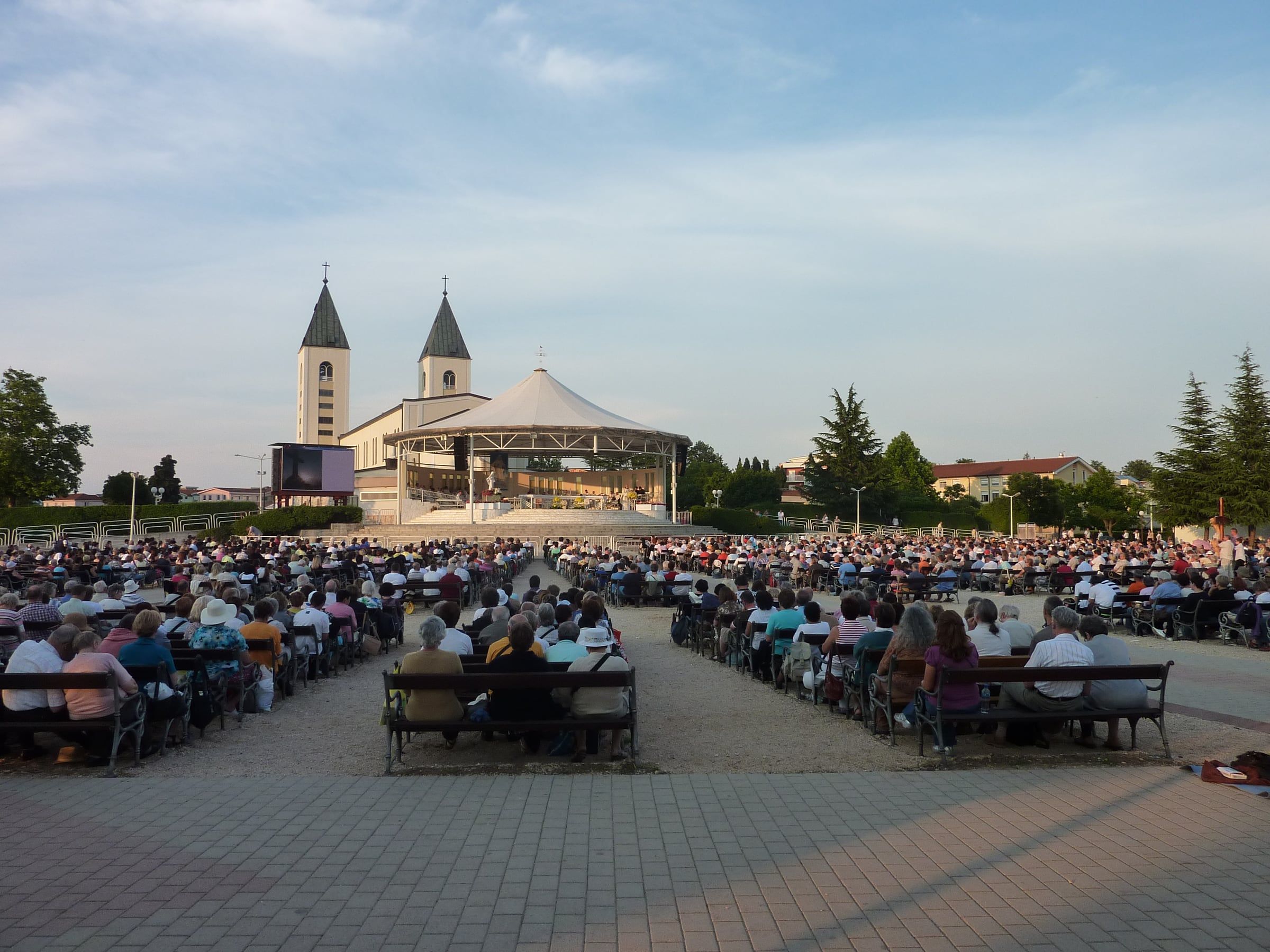
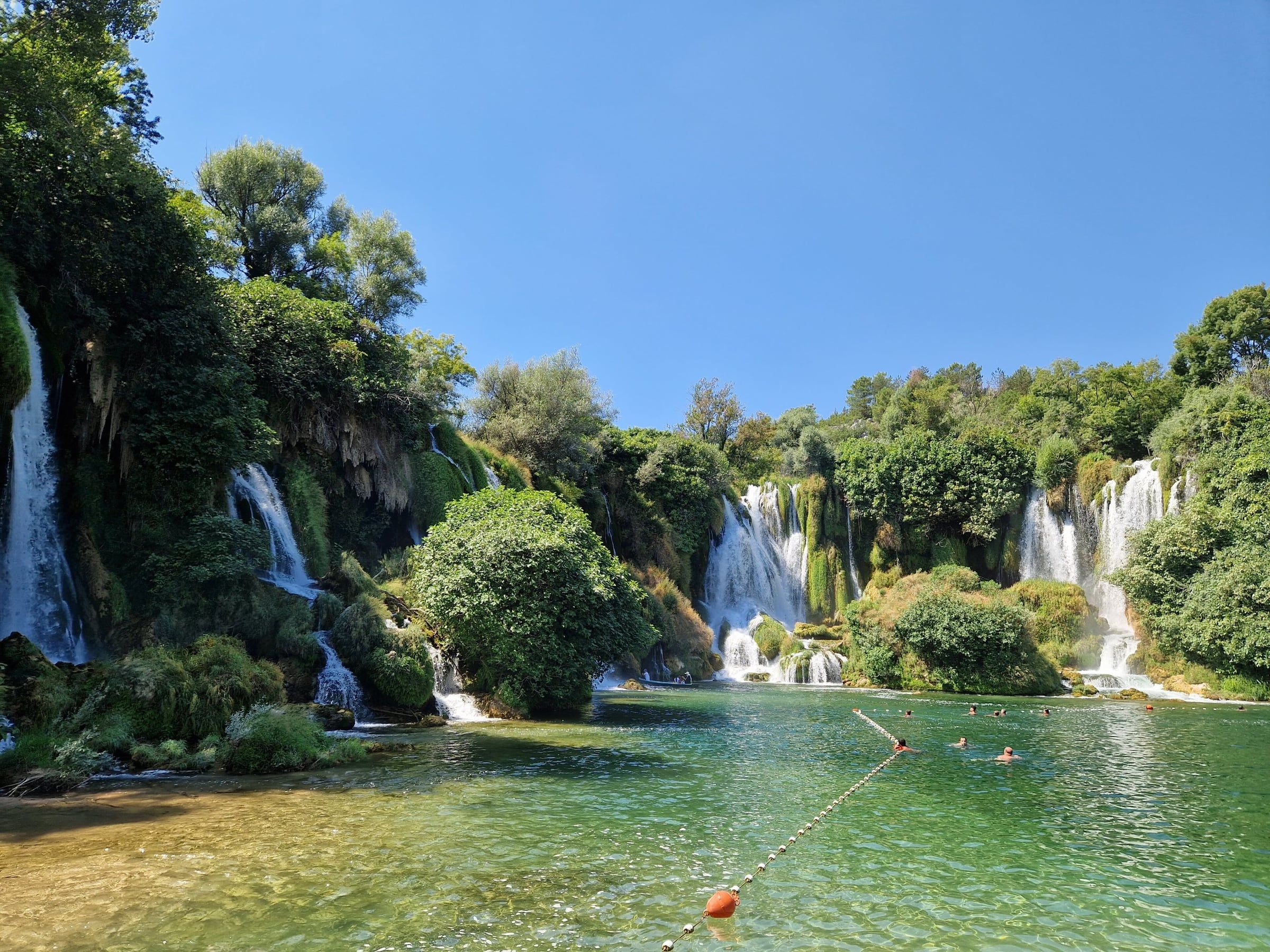
Blagaj pairs well with Počitelj and Kravice Waterfalls. See the day trips overview for how they fit together, the day tours page for comparisons, and Mostar Old Town for what to see back in the city.